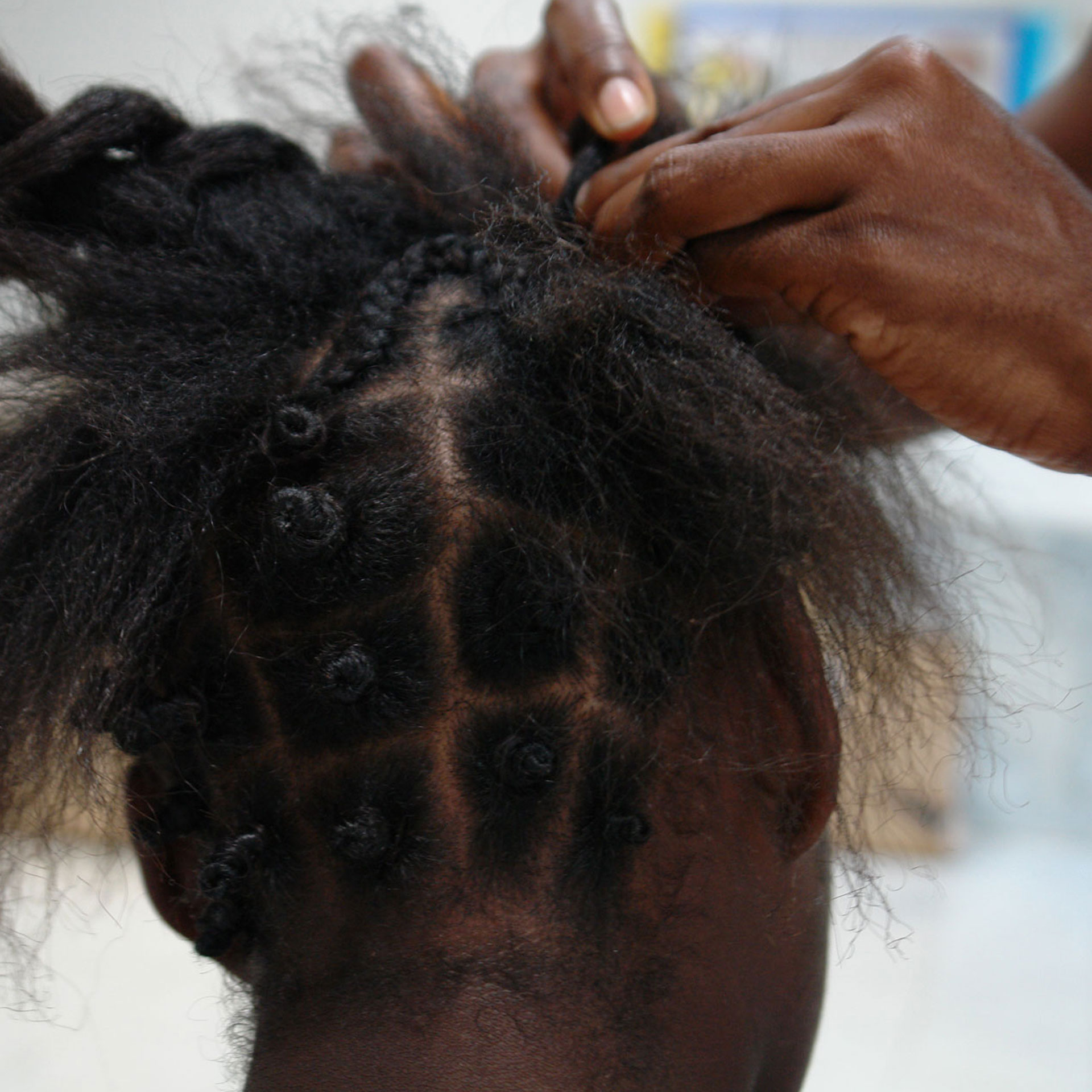
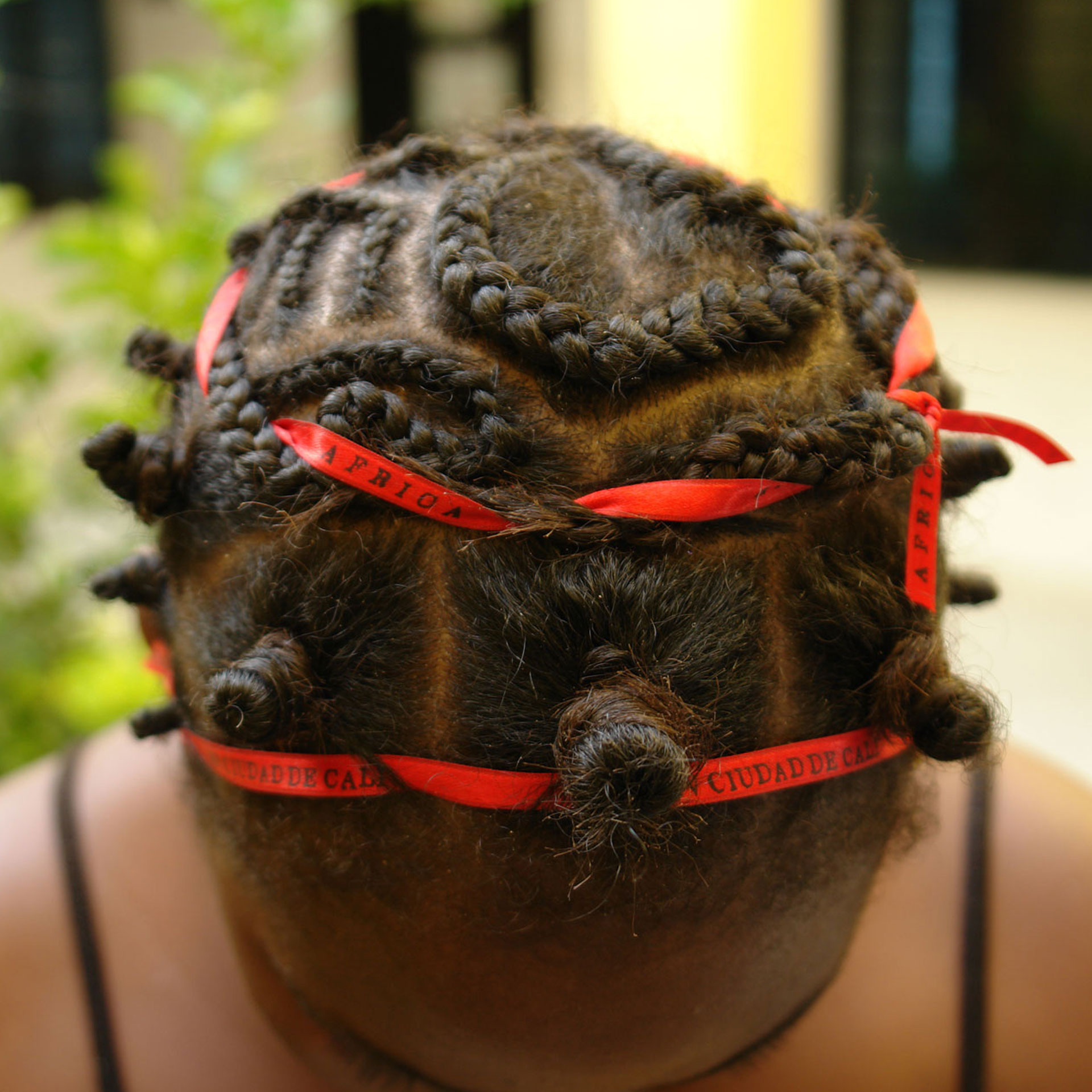
This is a collaborative project, which develops cartographies of the invisible borders in the urban landscape as an attempt of decolonizing past narratives, through ancestral afro Caribbean hairstyles.
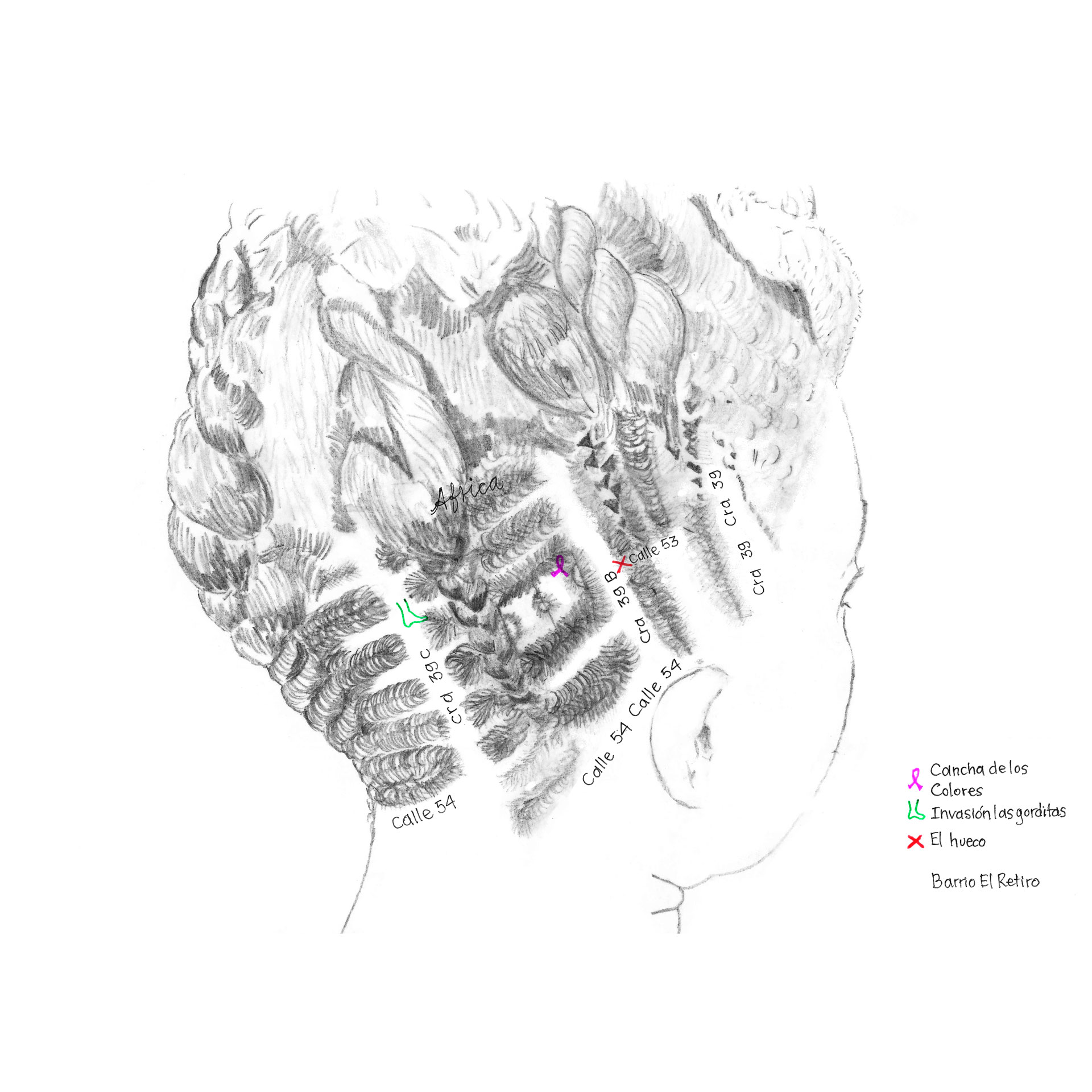
The poetics of the ancestral practices of African descents are a trigger in the choice of the medium to represent this cartography. These traditions are preserved and transmitted by the maternal lineage, because the aesthetic and historical components constituted a form of social, political, and cultural resistance of the Afro-descendants community in times of the Colonial Americas. In Colombia, between 1550 and 1810, afro hairstyles were used as guide maps to follow the routes at escaping the slave’s states.
Migration as a natural phenomenon is transit and displacement. The settlements and occupations/invasions, as a result of this experience, are coordinates in this artistic proposal. I understand migration as interference movement that affects bodies in transit (political subjects) and have complexly transformed the geopolitical space. Facing the diaspora of each symbolic/physical place, border bodies continue challenging natural and artificial limits, recently translated into borders. A cross-pollinated zone of exchange where centre and periphery meet.
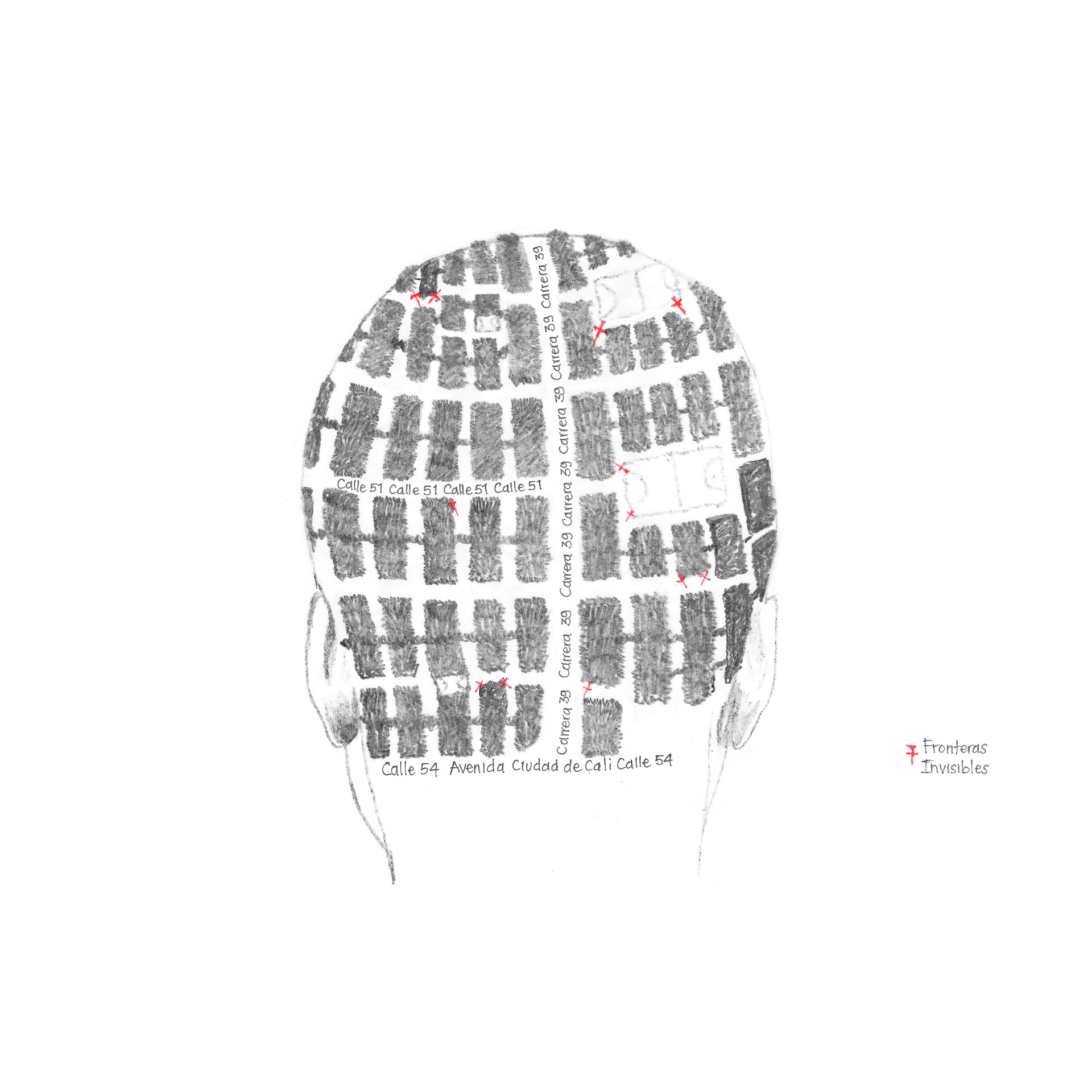
The research for the realization of this proposal begins in early 2014, assisting to the Batuta Foundation (Cali, Colombia) as a volunteer in the psychotherapy program that the Foundation develops in the periphery of the city. This exchange process with the community, facilitated the fieldwork that made possible to identify the invisible borders of the district through the perceptions of infants attending the foundation.
The INVISIBLE BORDERS located in El Retiro borough east of Cali, are inhabited by 97% of Afro-descendant population. They behave like open wounds*. In the area, mental boundaries affect physical boundaries, becoming a daunting reflection of generational conflicts that invade and transform the geography. Gangs have a great role in the responsibility of the existence of invisible borders.
My artistic practice is intensely related to the public space, the urban, the borders, the non-places, and the transformations of geography through history. I am interested in mapping behaviours produced by the intersections and constant dialogues between multicultural communities and neighbourhoods, and the boundaries created from the identity of these cultures.
______________________________________________
* Gloria Anzaldua. Borderlands. Aunt Lute Books.
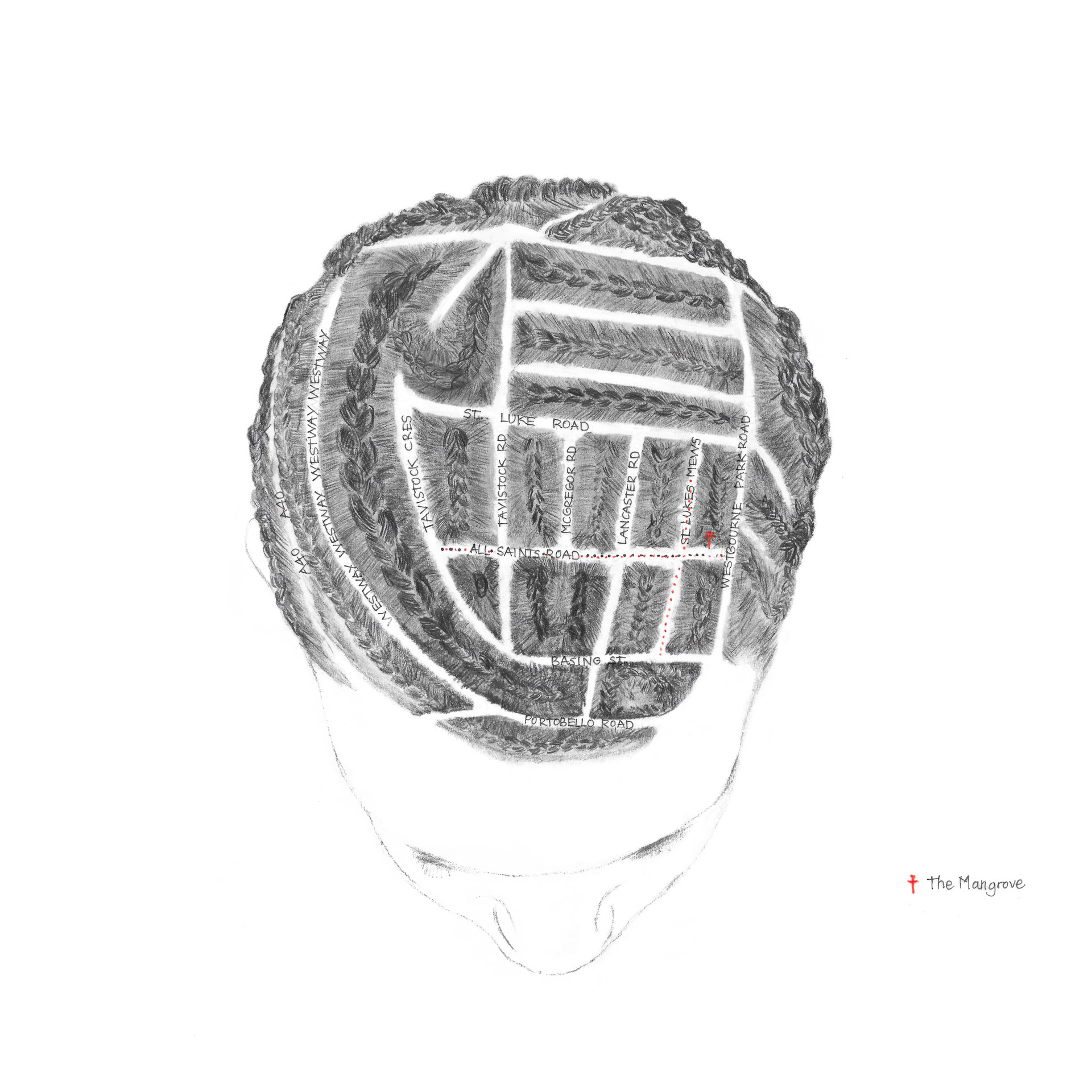
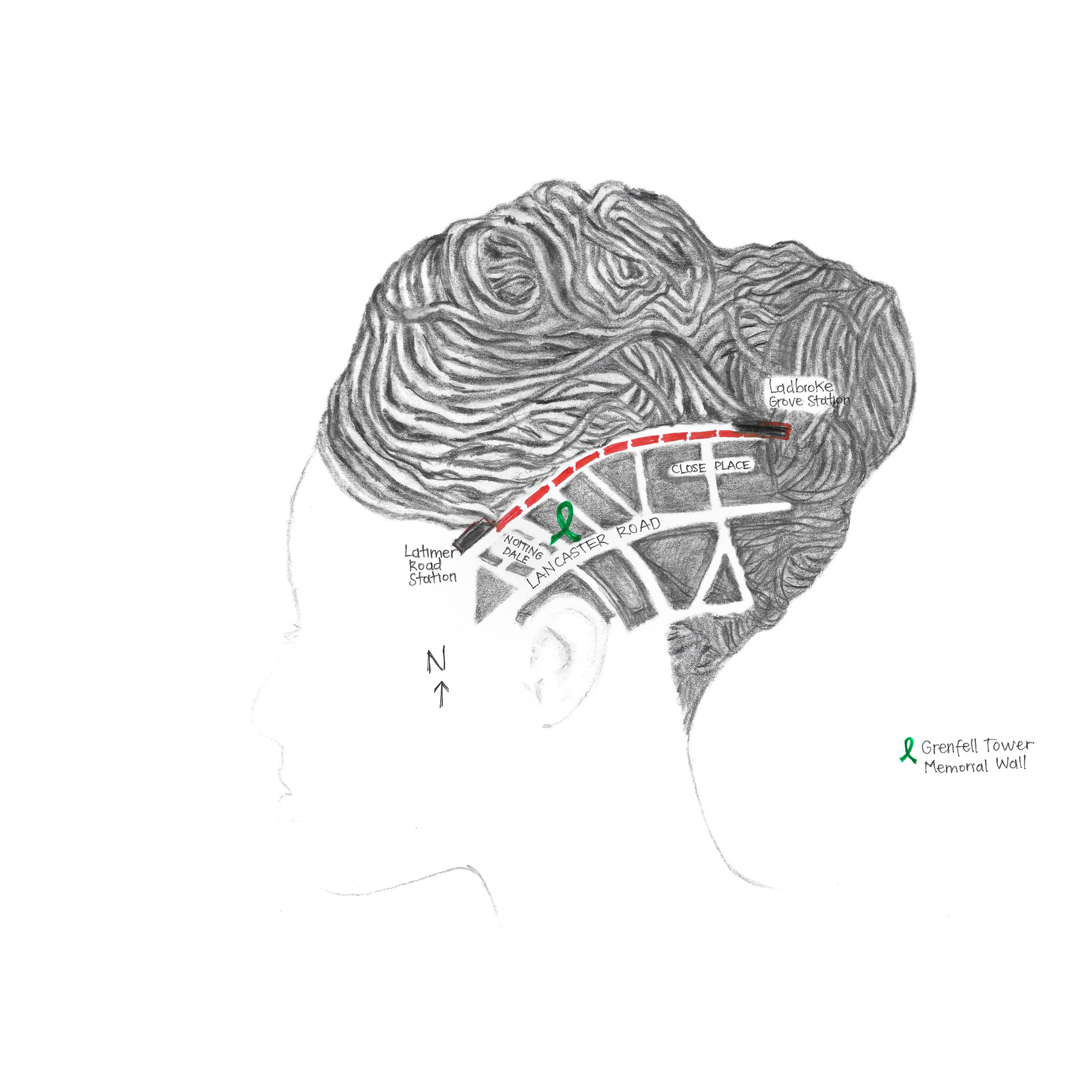
Afro-Caribbean hairstyles are the ancestral technique of reconstruction of the historical memory of the first Afro-Caribbean settlements in London. In this case, the Notting Dale area currently Notting Hill and Ladbroke Grove. This artistic cartography tries to activate dialogues and questions with the colonizing image that the maps show as mechanisms of control and division of a territory (borough) that has been the political scenario of the struggle and Resistance of the Afro-Caribbean population that settled in after the second world war.
London materializes its political-social tensions, like the racial ones through its urban geography. Examining how racism and gentrification are currently articulated, it is evident that they continue to alter the urban landscape of the city. There are some spaces that have been moved by the complexity of its expansion and gentrification. It is clearly reflected by the forced systematic displacement of its vulnerable inhabitants.
The collective memory is a tool to carry out this cartography. The topography is committed to the historical memory of the place, where all these elements are braided into capillary maps attempting to make visible borders, margins, and otherness.
Este trabajo es un proyecto colaborativo, que desarrolla cartografías de las fronteras invisibles en el paisaje urbano, como intento de descolonizar narrativas pasadas a través de los peinados ancestrales afro Caribeños.
La poética de las prácticas ancestrales de lxs afrodescendientes son un detonante en la elección del medio para representar esta cartografía. Estas tradiciones son preservadas y transmitidas por el linaje materno, porque los componentes estéticos e históricos constituyeron una forma de resistencia social, política y cultural de la comunidad afrodescendiente en tiempos de la América Colonial. En Colombia, entre 1550 y 1810, los peinados afro se utilizaron como mapas guía para seguir las rutas de escape de los estados esclavistas.
La Migración como fenómeno natural es transito y desplazamiento. Los asentamientos y las ocupaciones-invasiones como resultado de esta experiencia, son coordenadas en esta propuesta artística. Yo entiendo la migración como un movimiento de interferencia, que afecta los cuerpos en transito (sujetos políticos) y transforma de manera compleja la geopolítica del lugar. Enfrentándose a la diáspora de cada espacio, físico o simbólico, los cuerpos fronterizos continúan desafiando limites naturales y artificiales, recientemente traducidos como fronteras. Una zona de intercambio y polinización cruzada, donde el centro y la periferia se encuentran.
La investigación para la realización de esta propuesta se inicia a principios de 2014, asistiendo a la Fundación Batuta (Cali, Colombia) como voluntaria en el programa de psicoterapia que la Fundación desarrolla en la periferia de la ciudad. Este proceso de intercambio con la comunidad, facilitó el trabajo de campo que permitió identificar las fronteras invisibles del Distrito a través de las percepciones de los infantes que asisten a la fundación.
Las FRONTERAS INVISIBLES ubicadas en el barrio El Retiro al oriente de Cali, están habitadas por un 97% de población afrodescendiente. Ellas se comportan como heridas abiertas*. En el área, los límites mentales afectan los límites físicos, convirtiéndose en un reflejo abrumador de los conflictos generacionales que invaden y transforman la geografía. Las pandillas tienen un gran papel en la responsabilidad de la existencia de las fronteras invisibles.
Mi práctica artística está intensamente relacionada con el espacio público, lo urbano, las fronteras, los no lugares y las transformaciones de la geografía a través de la historia. Me interesa mapear comportamientos producidos por las intersecciones y diálogos constantes entre comunidades y barrios multiculturales, y los límites creados a partir de la identidad de estas culturas.
____________________________________________
* Gloria Anzaldua. La Frontera. Aunt Lute Books.
Los peinados afrocaribeños son la técnica ancestral de reconstrucción de la memoria histórica de los primeros asentamientos afrocaribeños en Londres. En este caso, la zona de Notting Dale, actualmente Notting Hill y Ladbroke Grove. Esta cartografía artística intenta activar diálogos y cuestionamientos con la imagen colonizadora que los mapas muestran,
como mecanismos de control y división de un barrio, que ha sido escenario político de lucha y resistencia de la población afrocaribeña que se asentó después de la segunda Guerra Mundial.
Londres materializa sus tensiones político-sociales, como las raciales, a través de su geografía urbana. Al examinar cómo se articulan actualmente el racismo y la gentrificación, es evidente que continúan alterando el paisaje urbano de la ciudad. Hay algunos espacios que se han movido por la complejidad de su crecimiento y gentrificación. Se refleja claramente en el desplazamiento forzado sistemático de sus habitantes vulnerables.
La memoria colectiva es una herramienta para realizar esta cartografía. La topografía está comprometida con la memoria histórica del lugar, donde todos estos elementos se trenzan en mapas capilares que intentan visibilizar las condiciones de frontera, margen y alteridad.

Anguila Ballena © 2021